
Digital Check Payments: The Essential Guide to Faster, Safer Payouts in 2026

Why Digital Check Payments Are Replacing Paper
Digital check payments are quietly changing how businesses send money. The scale is hard to ignore.
The Numbers In 2025 alone, the ACH Network handled 35.2 billion payments worth $93 trillion — a 7.9% year-over-year increase, based on Nacha’s ACH Network data. While online ACH payments and bank transfers continue to grow, paper checks have not disappeared. They have simply become inefficient and risky.
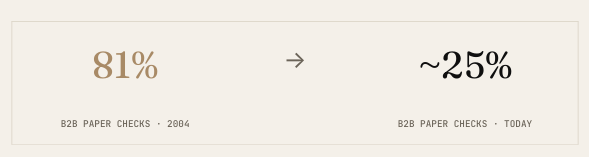
The shift is not just toward digital payments. It is about improving how check-based payouts work in a modern environment.
The Real Problem with Paper Checks.
Paper checks come with built-in friction. Each step introduces delay or risk.
Built-in Friction
For businesses handling large volumes, these issues compound quickly.
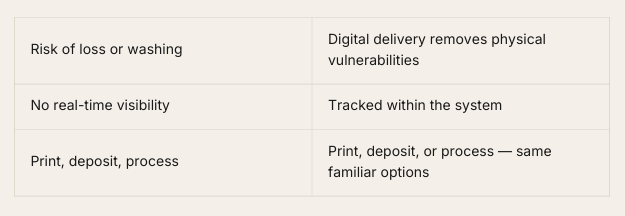
— Sensitive banking details are printed openly
— They pass through multiple handling points
— They sit in mailboxes before delivery
— There is little real-time visibility
The Fraud Risk Digital delivery also helps avoid “check washing” — a common mail-based fraud tactic that has made traditional paper checks increasingly risky for many businesses.
“The shift is not just toward digital payments. It is about improving how check-based payouts work in a modern environment.”
What Digital Check Payments Actually Are
Digital check payments are not the same as ACH transfers. This is where confusion often arises.
Instant Delivery
They are checks delivered instantly via email, allowing recipients to access and use them without waiting for physical delivery. Recipients can print, deposit, or process them like a traditional check — the format is familiar, the delivery is not.

Where Online ACH Payments Fit In
Online ACH payments remain a core part of the payment ecosystem.
Primary Use Cases
ACH is widely used for payroll, subscriptions, direct deposits, and recurring billing. It works best when recipients are willing to connect bank accounts. Digital check methods work when they are not.
Complementary by Design
In practice, most payout systems use both — to provide flexibility rather than forcing a single option on every recipient.
How Digital Checks Work in Real Payout Workflows
In real-world scenarios, payments are part of a larger payout process.
The Process
Digital checks are not a standalone feature. They are a layer within a structured workflow.
— Triggered after a payout is created.
— Delivered instantly via email.
— Tracked within the system.
— Linked to compliance and audit records.
Recipients are often given a choice of payment method. This ensures payouts do not get delayed due to preference or accessibility.
The Role of Automated Digital Checks
With automated digital checks, businesses can scale payouts without adding complexity.
What Automation Delivers
Trigger payments automatically after approval. Eliminate manual check creation. Send payments at scale. Track status in real time. This removes the need for printing and mailing — turning a manual process into a structured workflow. The mechanism is silent. The outcome speaks.
What Businesses Actually Gain
When businesses adopt digital check payments, the benefits arrive without friction.
Faster Delivery
Payments arrive quickly instead of days later.
Lower Operational Effort
No printing, postage, or manual tracking.
Reduced Risk
Digital delivery removes many physical vulnerabilities.
Better Visibility
Payments can be tracked and audited with precision.
Higher Completion Rates
Not every recipient prefers ACH — digital checks fill the gap.
Combining online ACH payments with digital check options ensures every recipient can be paid without friction.
Key Takeaways
Five points. The substance of what precedes them.
- Digital check payments modernize traditional checks through instant delivery.
- Paper checks remain inefficient and risk-prone; the shift is already underway.
- Online ACH payments and check-based digital methods serve complementary roles.
- Automated digital checks improve efficiency and scalability without added complexity.
- Flexible payout systems improve completion rates and the overall recipient experience.
Conclusion
The shift away from paper is already happening.
The Direction
Businesses are not just replacing checks. They are improving how payouts work overall. While online ACH payments continue to grow, there is still a need for check-based options. Digital delivery fills that gap — combining familiarity with speed.
The Focus
With automated digital checks, businesses can scale payouts efficiently without adding complexity. For most organizations, the focus now is on building a payout system that supports multiple payment methods while keeping the process simple and reliable. Platforms like DisburseCloud help businesses streamline digital payouts through flexible payment workflows, automated digital check processing, and secure payout infrastructure designed for modern payment operations.